Showing posts with label PBL. Show all posts

Project-Based Learning: Entrepreneurship, Finance and Design


Source: PaperStopper, ASIDE, 2013
Our third fifth-grade Entrepreneur Fair just ended, and we could not be more thrilled with the diversity of ideas by these young minds. It came as no surprise that so many of them paid close attention to every detail of their companies. From their initial business plans to their final presentations, the students worked to bring their ideas to fruition.

These young entrepreneurs took on this project-based learning assignment with great enthusiasm. They worked through problems in the design process to come up with solutions, often revamping their prototypes again and again. Equally rewarding was watching the “ah-ha” moments when they realized they were on to something.

Source: Tree Bark Edibles, ASIDE, 2013
Perhaps the toughest part for them was figuring out how to finance their ideas. Francine Wisnewski, who is one of the lead teachers for this project, worked tirelessly on the financials with the students in math class. Many quickly realized that the cost to make their products exceeded what they could realistically charge to make a profit. Occasionally, too, some had to scrap their ideas and start afresh.

Source: Lights: Out, ASIDE, 2013

The final phase of the project was marketing their goods, complete with brand messaging, packaging, and display. It’s where we hoped all the lessons in media literacy they’ve learned through the years would come together. They did not disappoint us either. To help advertise their wares, they wrote jingles in English class with their teacher, Barbara Thomas, and recorded them in GarageBand with the technology teacher, Leslie Gulbransen.

Two of our most innovative ideas that tried to solve real problems were Lights Out and PaperStopper. Some displayed incredible handiwork in crafting their products, such as Spark Accessories and DnA Bows. Still others, such as Tree Bark Edibles, took a snack recipe and packaged it with an environmental note. Each entrepreneurial idea carefully thought out the packaging, logo design, and branding that showed a continuity worthy of any business. 

Source: DnA Bows, ASIDE, 2013
The pride in what they had accomplished was evident on the day of the fair. They were beaming with joy, and all the practice shined through in their customer service. As teachers, it was an emotional high for us to see it come together. These young entrepreneurs learned far more than they realized, but most importantly, they learned they could do anything if they put their minds to it.

Source: Spark Accessories, ASIDE, 2013
Project-based learning that brings together multiple disciplines allows students to work through ideas, encourages risk-taking, and engages kids on multiple levels. It integrates financial and media literacy into the process and challenges kids to think like designers. It’s more than just a project; it’s a life lesson. All of this is done with a network of dedicated teachers collaborating with one goal in mind, learning.

Posted in , , , , |

Make It Pop - What Is The Appropriate Project Pizzazz?

Source: Killer Infographics
One of biggest questions in utilizing technology is how much visual splash to incorporate into student projects. Judicious teachers want to maintain a PBL approach that is grounded in information and meaning. Students, however, often get giddy at the prospect of neon animations and swirling Prezis. The goal is to balance a love of color with an understanding of effective design.

The design firm Killer Infographics created the "Make it Pop!" motion graphic below to highlight the potential innovations of modern media but also the potential excesses of over-exuberant marketers. Their satire of lavish buzz-building hits all of the sweet spots in zinging hyper-aware advertisers.


For teachers, this clip is an ideal reminder of the importance of media literacy. Educators need to guide young children in recognizing the influence of flash over substance. It also offers a fun and gaudy crib sheet in creating projects that optimally blend all of the colors, images, typography, and music.

Essentially, any tech-preneur needs to understand balance. He or she needs to separate the visual wheat from the chaff. Media savvy students need to assess what is dynamic and what is distracting, so they can appreciate what is eye-catching branding verses what is fluffy overkill.

Posted in , , , |

Creating Student Avatars - Balancing Project Design With "Safe For School"

Source: Dude Factory
As school projects migrate to laptops and tablets, student choice becomes a blessed corollary to any multimedia creation. Even the most scripted lesson, when executed via a web tool, can find a way to incorporate a small amount of customization. A lot of Internet resources feature dynamic themes or color choices that permit student individualization. At the very least, however, most blogs and social networks allow users to upload unique avatars to distinguish their profiles.

An avatar is a personalized online icon that represents a user's virtual self. Whether on open-ended web pages or straightforward Prezis, a signature avatar can give a child great pride in his or her masterpiece. There are a lot of quirky avatar generators available on the web. Many of them, though, require accounts. Even if free, these logins require email addresses and erect barriers to ease-of-use and effiency. Also, many of the cleverest avatar sites are not safe for school. For example, Dude Factory has great options, but it allows characters to hoist martinis.

The sites below are free, with neat and appropriate options in creating avatars. They also appeal to the wide range of tastes. By the way, we find it easiest to avoid the process of saving or downloading the finished products, and instead we use the screencap command to select a desired field.

Source: DoppelMe

DoppelMe


DoppelMe offers an impressive range of colors, with upbeat and kid-friendly characters. The accessories and backgrounds provide cute choices for boys and girls. Users can select among basic clothing and expressions right away, but they can gain access to more free items by signing in.

Source: Unique

Unique


The Unique interface presents a Japanese comic book,  anime-style gallery. The cartoon characters have appealingly mischievous grins. The smooth application also presents one of the easiest visual tools of all the avatar sites.


Source: Reasonably Clever

Reasonably Clever


For Lego figures, Reasonably Clever is a terrific option for young learners. The web page and graphic interaction are not nearly as crisp and modern as other sites, but the end products are still winsome for projects and class blogs.

Source: BuiLD
YouR WiLD SeLF

BuiLD YouR WiLD SeLF


Sponsored by the New York Zoos and Aquarium, BuiLD YouR WiLD SeLF combines essential avatar choices (eyes, clothing, etc.) with outlandish animal features to generate half-human, half-beast images. In an illustrative style, the drawings echo picture books in their artistry.


Source: Bitstrips

Bitstrips


Bitstrips focuses more on the nuances of the face than other avatars. The comics-friendly site uses cartoony animation to offer a host of choices in designing just the right length of hair and just the right creases on the forehead. The final product, therefore, can actually resemble the user, if desired.


Source: Dream Avatar

Dream Avatar


For slightly older students, Dream Avatar is surprisingly sophisticated in its spectrum of creative elements. The icons evoke images from manga, and the accessories allow for a fully realized backstory to each character. Some teachers may not want children selecting among the more teenage options, but the good thing about the site is that it can appeal to any age of techie (including adults).

For other avatar generators, check out Picasso Head for older students or Square Face Icon for younger students. In addition, this Copyright Friendly wiki lists 30 - 40 possible avatar choices.

Posted in , , , |

The Design Of Project-Based Learning - Color Theory For Web 3.0

Source: Colourlov.in
One of the promising truths about project-based learning (PBL) is that it's coming whether schools like it or not. Even in an age of race-to-the-top testing, children are slowly but surely doing more and more work via technology.

Even as some instructors fall back on "project-oriented" learning, rather than true PBL, the gradual spread of tablets and BYOD tasks will invariably shift classroom education toward a more hands-on model. The hope, therefore, is that personalized iPads and home tech assignments will encourage creative interactions and self-directed investigations.


Color Theory Infographic from Sean Ferguson on Vimeo.

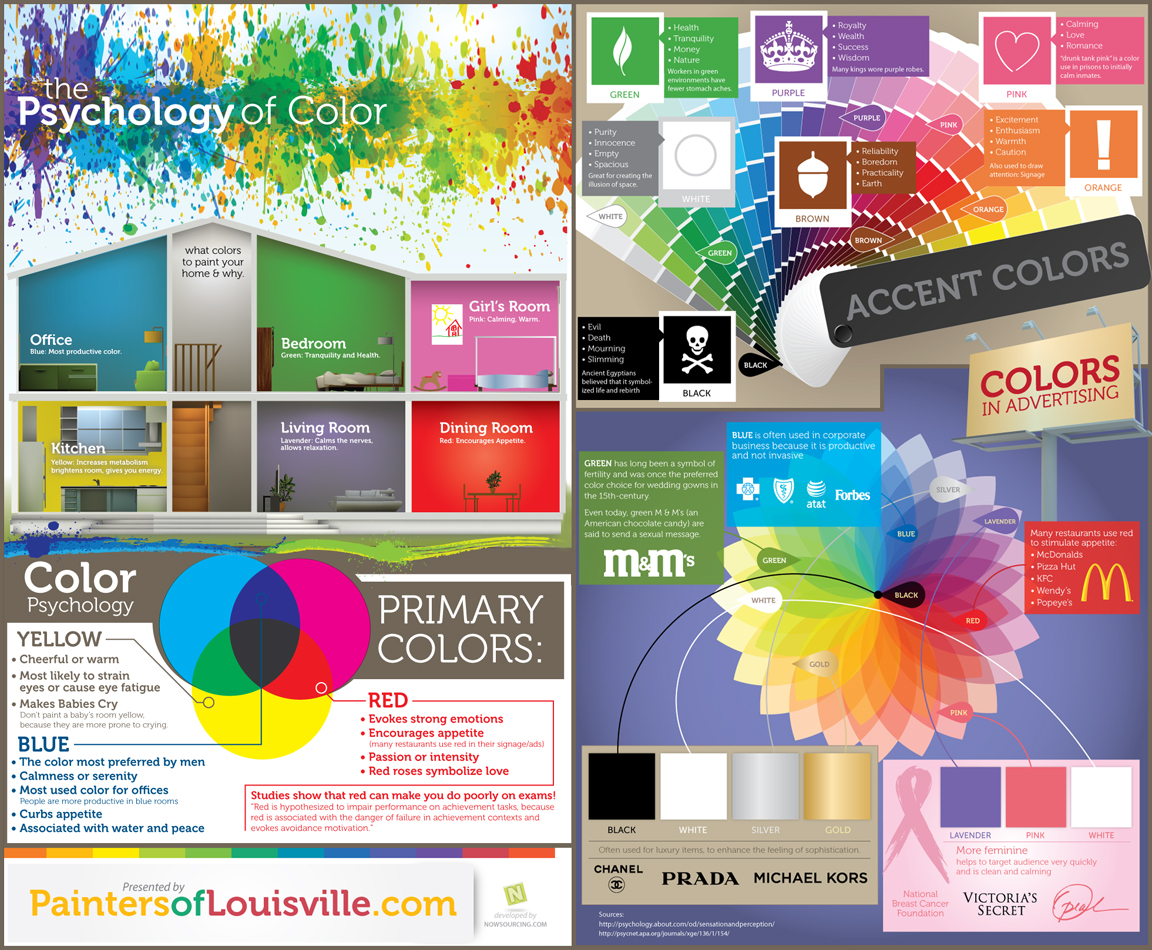
One of the most basic choices in producing a technology project is the selection of color. Students in their iMovies, Keynotes, and Tumblrs can now pick from a palate of pixelated paints. All too often they get over-excited and click on a madcap miasma of mismatched hues. Knowing a little bit about color theory can go a long way toward designing an appealing and effective project in the open-source web 3.0 world.

Source: Visual.ly
Many of the modern concepts around the use of color, particularly in technology or multimedia formats, spring not from classes in oil painting but from theories of branding. Crafting an alluring logo or a unique web banner both draw from evolving notions of Internet marketing. These graphic schemes can relate effectively back to the classroom, as students pair fonts and tints in their Prezis or as they select background themes for their project blogs.

The motion infographic above by Sean Ferguson gives a crisp and helpful primer in fundamental color theory. It lays out the guidelines of partnered tones, in addition to other considerations of visual design.

Source: Feel Guide
For other resources about color theory, we recommend:
Choosing among styles of lettering, by the way, can often have the same positive impact on projects. Check out "A New Typography Of Language" for ideas on teaching students about fonts.

Posted in , , , , |

Phenomenology - Education Of The Unexpected

Source: Obey Giant
Perhaps the most effective viral visualization of the past 20 years has been the OBEY propaganda pop-art phenomenon. Long before Twitter and Facebook manufactured memes, this grassroots graffiti campaign stirred surprise and admiration from San Francisco to Brooklyn. Ostensibly an underground poster movement, the OBEY image featured a bare-bones black-and-white lithograph of Andre The Giant, the legendary professional wrestler and authoritarian powerhouse.

Starting in 1989 in Providence, Rhode Island, the image began to appear on urban alleys and billboards, urging passersby to "Obey!" in a totalitarian message of conformity. The movement was initiated by artist Shepard Fairey, who would later achieve acclaim with his WPA-inspired "Progress" poster for Barack Obama's 2008 campaign. Ferry imagined a street spreading of agitprop design that would enforce obedience in the absence of an obvious message. The directive and source would be unknown. Only urgent would be the aggressive dispatch, without a discernible motive.

It would succeed mightily. Soon the OBEY graphic would find itself in all pockets of the country, leading eventually to a commercial empire. The thrust behind the art movement, though, was phenomenology. As described by Fairey, "the first aim of Phenomenology is to reawaken a sense of wonder about one's environment. The OBEY campaign attempts to stimulate curiosity and bring people to question both the campaign and their relationship with their surroundings."

Source: Obey Giant
In philosophy, the definition of phenomenology is "the study of structures of consciousness as experienced from the first-person point of view." In education, the notion of "stimulating curiosity" is precisely the purview of every Early Childhood teacher. They inspire young minds through new exposures, such as a first bird's nest or a homemade pretzel. The OBEY Manifesto notes that, "people are not used to seeing advertisements or propaganda for which the motive is not obvious." Yet in elementary education, the visual encounter and hands-on experience are themselves the motives. Making sense of visuals is graphicacy at its best, and there need not always be deeper rationales.

The OBEY mission, underground yet in-your-face, has been perpetuated by recent street artists such as Banksy. But don't teachers do this all the time? They craft rich bulletin boards for children to stumble upon. They show political cartoons, videos, and maps and let students reach their own conclusions. Project-based learning (PBL) is itself a study in phenomenology. PBL, of course, must be based on explicit steps and rubrics so students can meet the goals. But sometimes unexpected encounters can offer moments of illumination and teach children to deal with what is unforeseen. Occasions of self-discovery and trying to make sense of environments offer true independent thinking.

Source: Banksy
Our former English colleague, for example, used to describe a lesson where she would stage a simulated shouting match in front of a class of startled students. Two teachers would arrange to meet at her doorway and engage in a heated mock argument, yelling vaguely specific terms like "benefits schedule" and "lesson approval." After 30 seconds, the faux fight would disappear, and the teacher would ask the children to write down exactly what had happened. She would then read their accounts aloud. Invariably, the students were shocked to hear that their classmates had recorded drastically different versions of the same event. The lesson would then transition to a discussion of eye-witness accuracy in legal trials and newspaper stories. But the immediacy of wrangling with a confusing display left a lasting impression on the kids.

Source: Over The Airwaves
Other possibilities for phenomenology in the classroom could be to spring surprise evidence during a Mock Trial crime scene visit. Or, for example, our fourth-graders each year reenact a trip on the Oregon Trail, encountering new dilemmas at stations and drawing "fate cards" to deal with real-world decision-making. The art of the unexpected reinforces the benefit of simulations like Constitutional Conventions or U.S. Senate sessions. Not everything must be spelled out to students. In fact, grappling with the unexplained makes for proactive, genuine education.

For additional reading, we recommend:

Posted in , , |

A Book Series and PBL in Media Literacy

Source: Capstone Publishing
The Fact Finder book series by Capstone Publishing helped us design one of our signature TIME (technology, information, and media education) project-based learning units called Question It. This set of eight books provides a perfect way to introduce media literacy to students in the elementary classroom. Each book covers a different media, including magazines, television, movies, music, news, video and computer gaming, online, and new media. Their catchy titles, such as Coming Distractions (movies), TV Takeover (television) and Music Madness (music), appeal to kids as well.

The similarity in design and format makes it easy for students to work in groups on a particular topic, and each book revolves around the five key questions toward becoming media literate:
Who made the message and why?
Who is the message for?
How might others view the message differently?
What is left out of the message?

How does the message get and keep my attention?
Source: Capstone Publishing
In addition, each book provides an overview of the people who work in the different media industries and the lingo peppered throughout, giving kids the language to understand terminology such as target audience and product placement, as well as other lingo particular to the field.

Source: Capstone Publishing
By using this series as a springboard for their project, the students learned about the reality of what goes on behind the scenes on their topic. They produced their own media pieces to teach their peers about the validity of online media, marketing techniques in magazines, or the gimmicks used in music promotion and movie hype. This included understanding the techniques used for product placement, fact verses opinion, appeal, and the art of persuasion.


The students used their research to create iMovies to inform others how to question what they see, hear and read in the media, and they made a formal presentation showcasing their work at our local Apple store. Plain and simple, these young media moguls took control and came away with a wealth of understanding about media conglomerates. Essentially, they became smart consumers by learning how to be media-savvy producers to teach others.


For more information on how we integrate media literacy into student learning, please see our earlier posts on the topic.

Posted in , , |

Search

Swedish Greys - a WordPress theme from Nordic Themepark. Converted by LiteThemes.com.